Why the form factor is attracting attention
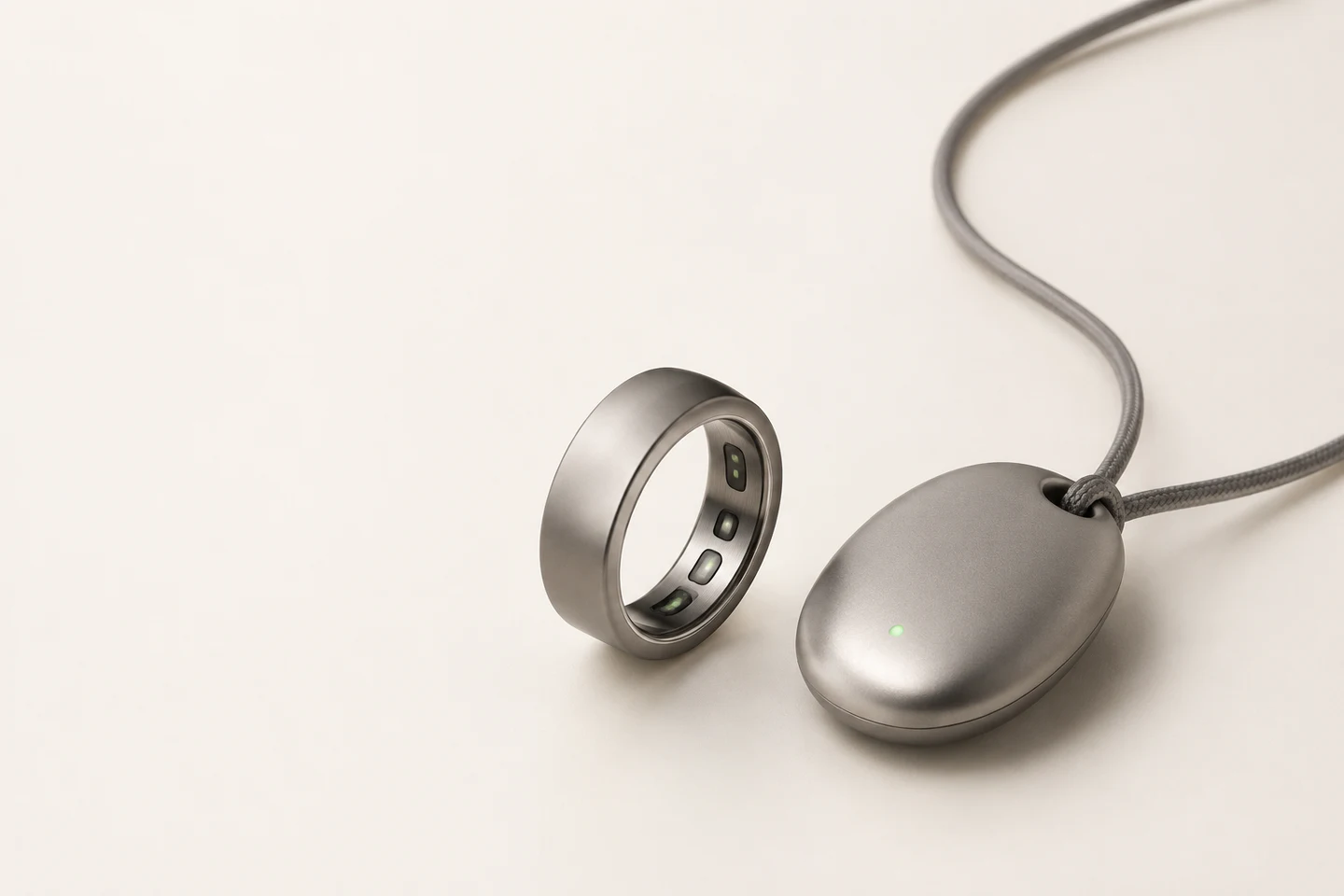
A ring is continuously available on the hand; a pendant has room for a larger battery, microphone and antenna while remaining less demanding than a screen. Both can act as low-friction inputs for voice notes, gestures, health signals or contextual AI. Their value comes from presence, not from visual complexity.
The market is experimenting with different jobs
Some smart rings focus on passive health sensing. Others add gesture control or a microphone for capturing short thoughts. Pendants lean toward ambient memory and voice assistance. These are different trust models: a health sensor, an intentional recorder and an always-listening assistant should not share the same default behavior or product copy.
Privacy must be visible and controllable
An ambient device needs an unmistakable recording state, a fast physical stop action, understandable retention controls and a clear explanation of cloud processing. Designers should assume that bystanders, not only owners, will judge the product. A small form factor makes trust cues more important, not less.
The winning product may be a focused one
Early products often try to combine health, memory, messaging, music control and a general assistant. Battery and interaction limits favor a narrower promise. A ring that captures deliberate notes or a pendant that summarizes selected moments can be more credible than a device described as an invisible answer to everything.